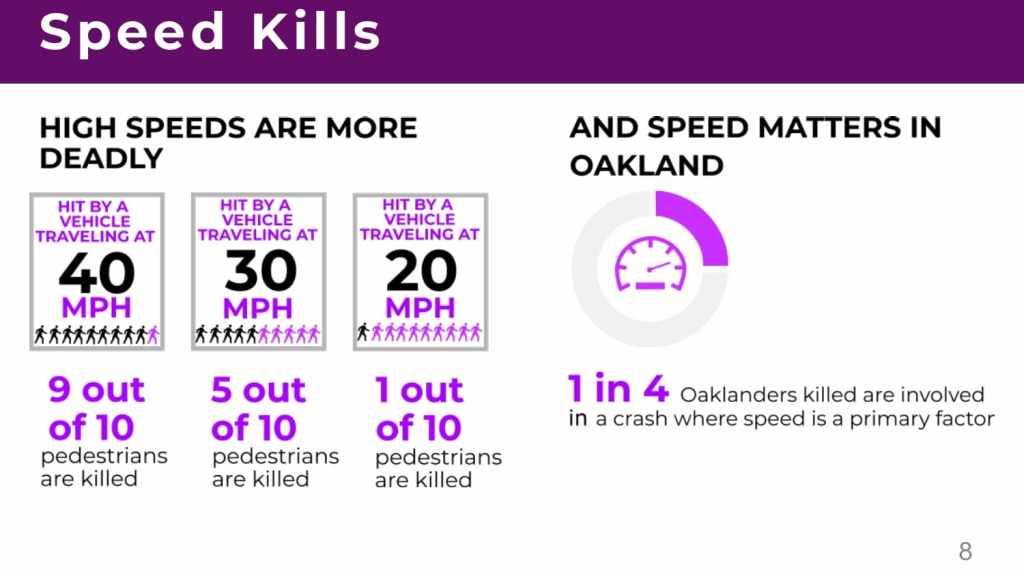
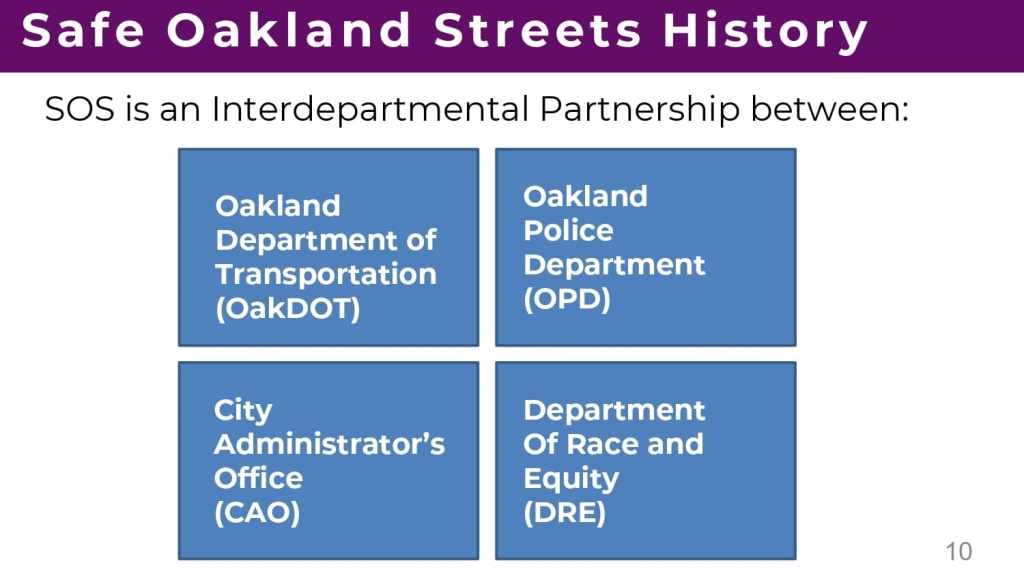
At the May 25, 2023 BPAC meeting, OakDOT Policy & Intergovernmental Affairs Senior Advisor, Tony Dang, provided the second annual update of the SOS initiative. The SOS Initiative was launched in 2021 with the primary goal of preventing severe and fatal crashes and related disparities impacting Black Indigenous and People of Color (BIPOC) communities, persons with disabilities, seniors, children, and low-income populations. This presentation will focus on reporting on progress made in 2022.
The Safe Oakland Streets initiative’s second annual report was also presented at the City Council’s Public Works Committee on Tuesday, May 23, 2023, and Oaklandside covered the item.
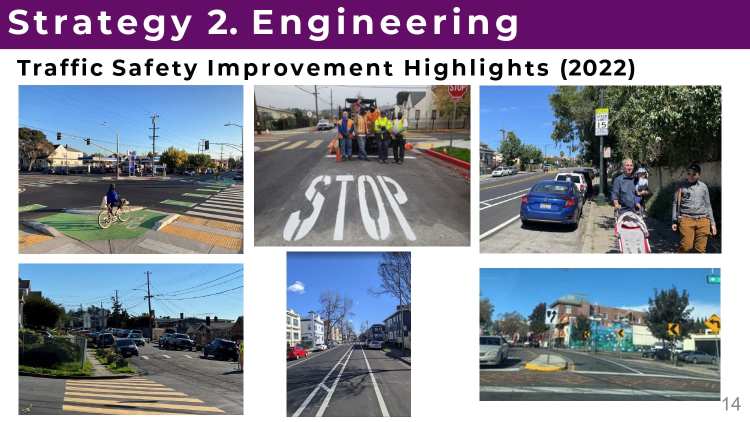
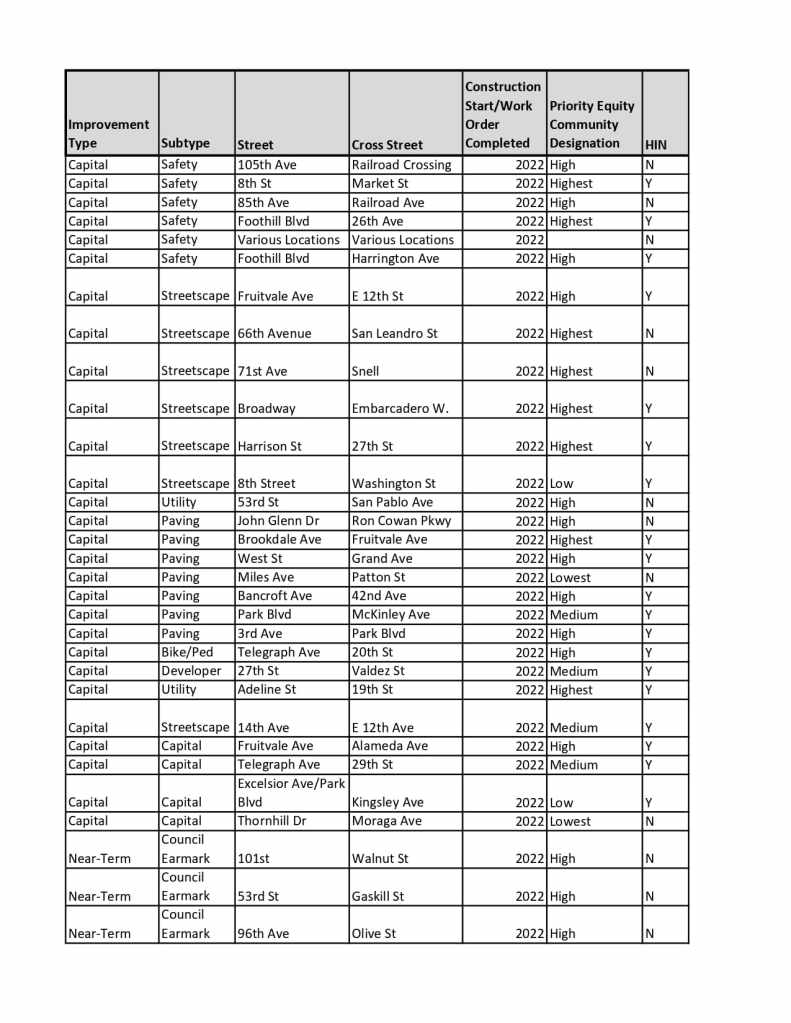
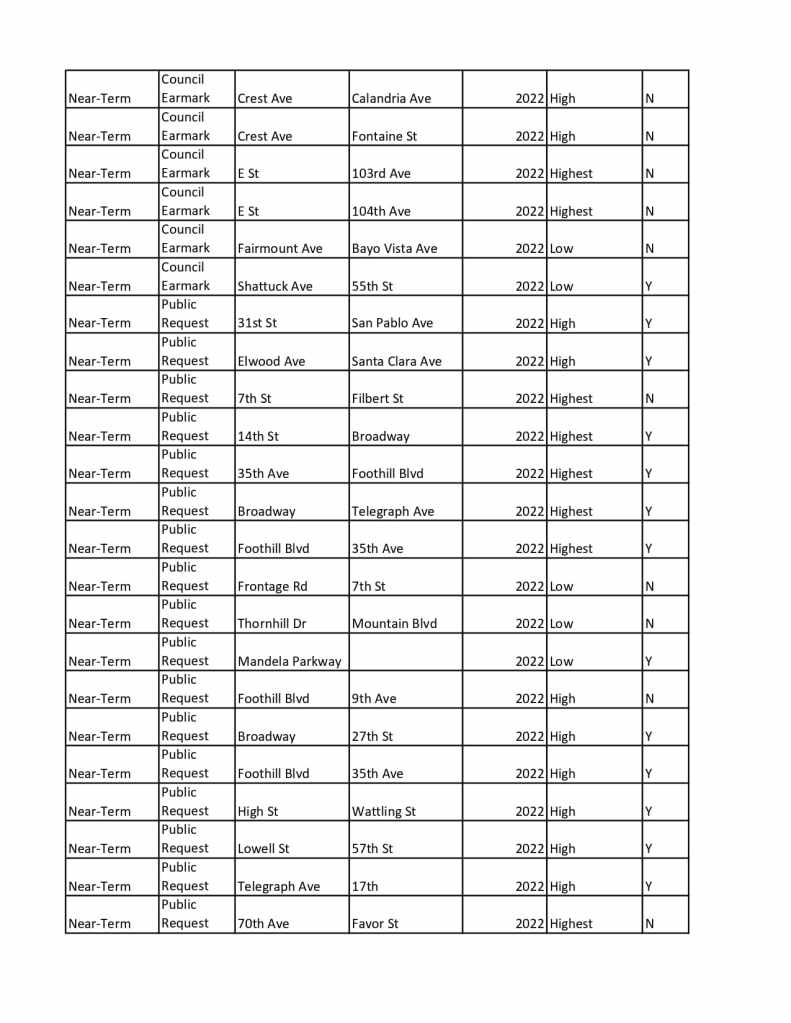
An excerpt from the presentation is below, followed by the full presentation and list of projects that was referenced in the slides on Strategy 2: Engineering.
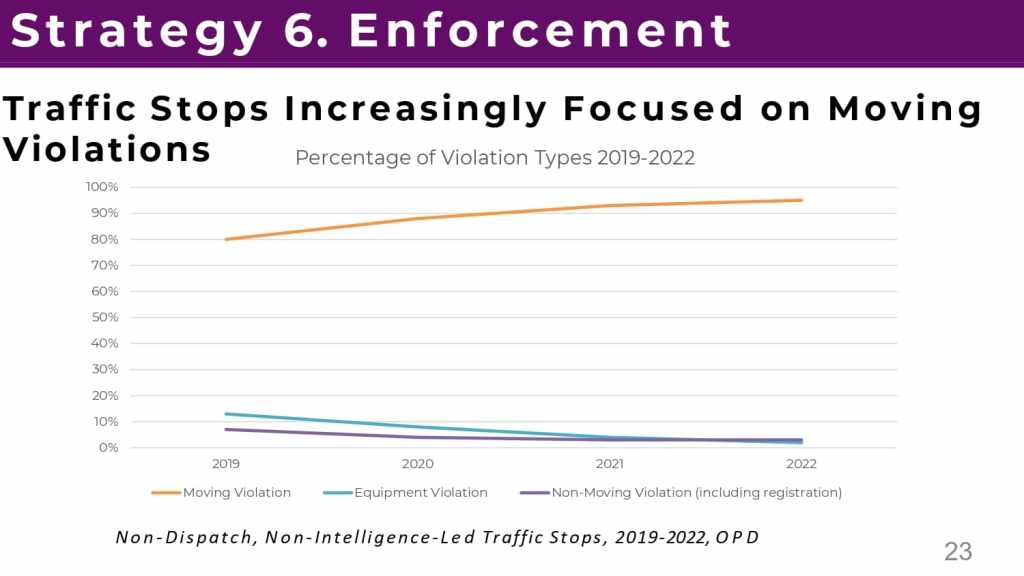
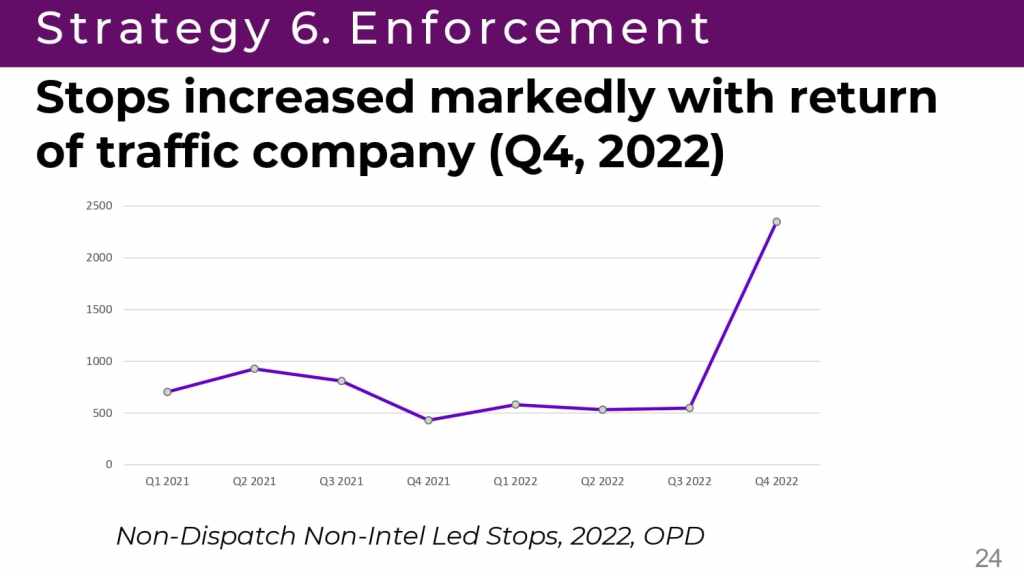
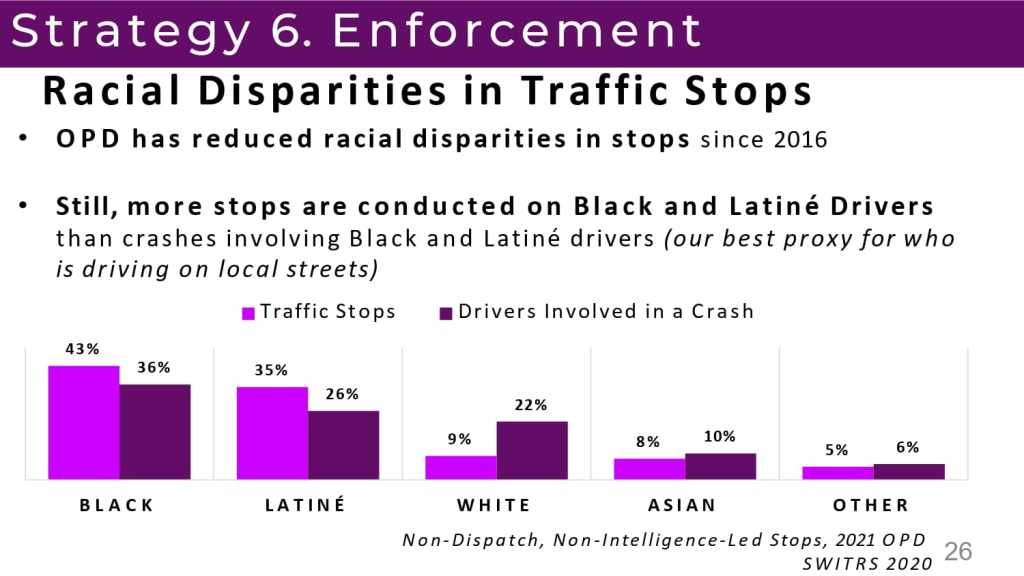
Strategy 6: Enforcement
- Traffic Stops on the High-injury network (within 500 ft of HIN)
- 2019: 61%
- 2022: 69%
- Traffic Stops for Most Dangerous Behaviors
- 2019: 40%
- 2022: 72%
Non-Dispatch, Non-Intelligence-Led Stops, 2019 -2022, OPD
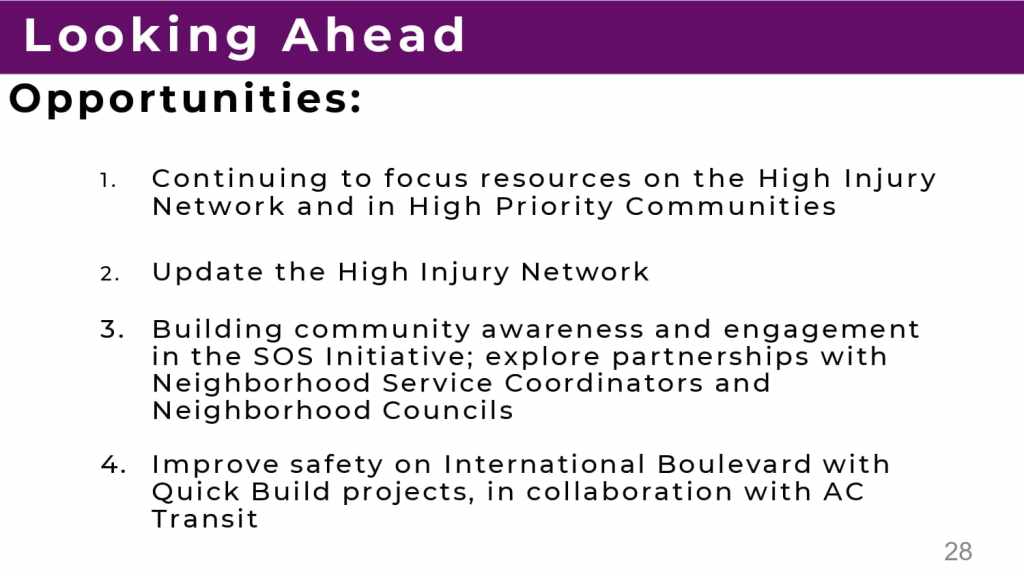
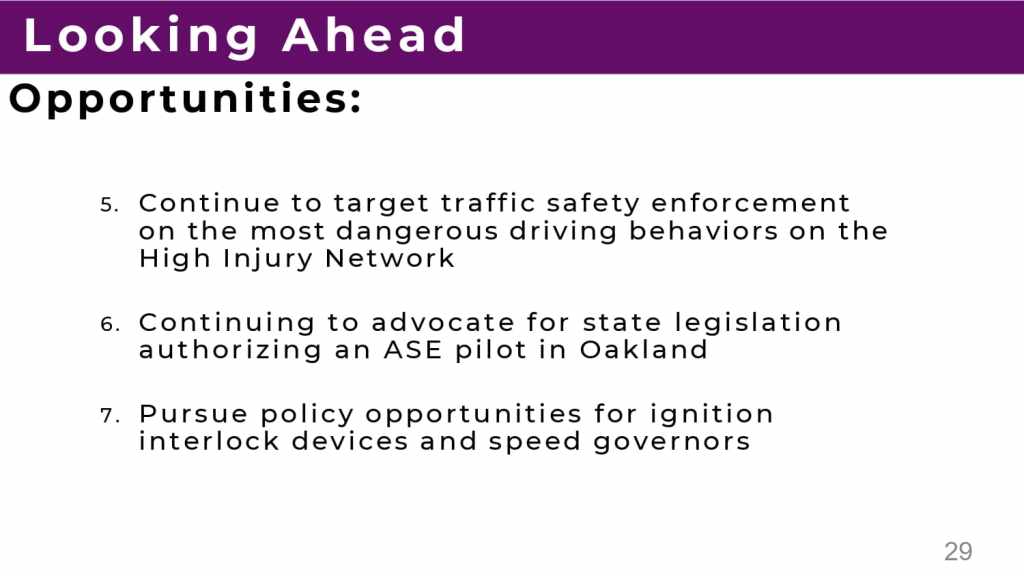
Looking ahead — opportunities
- Continuing to focus resources on the High Injury Network and in High Priority Communities
- Update the High Injury Network
- Building community awareness and engagement in the SOS Initiative; explore partnerships with Neighborhood Service Coordinators and Neighborhood Councils
- Improve safety on International Boulevard with Quick Build projects, in collaboration with AC Transit
- Continue to target traffic safety enforcement on the most dangerous driving behaviors on the High Injury Network
- Continuing to advocate for state legislation authorizing an ASE pilot in Oakland
- Pursue policy opportunities for ignition interlock devices and speed governors
Presentation









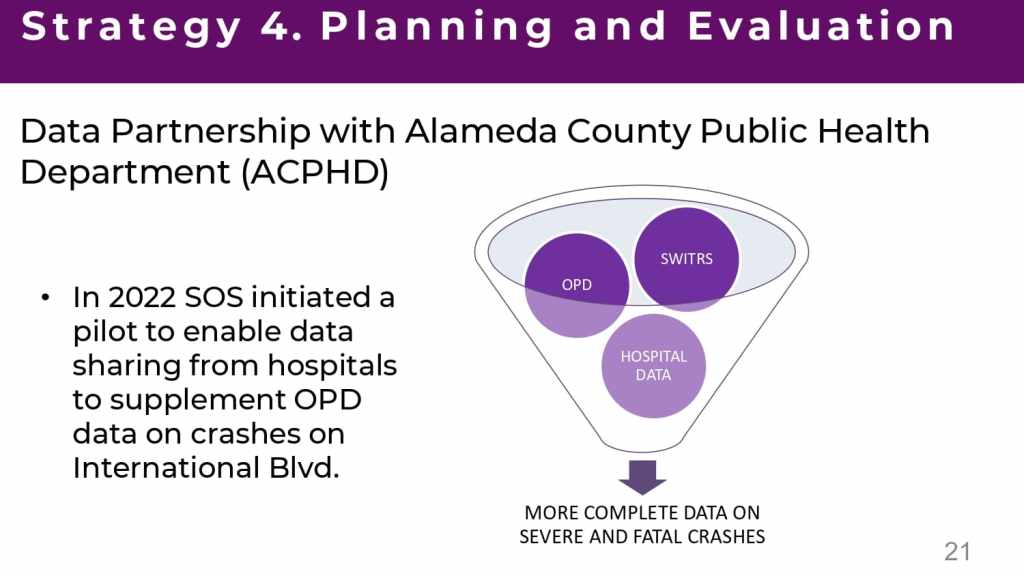
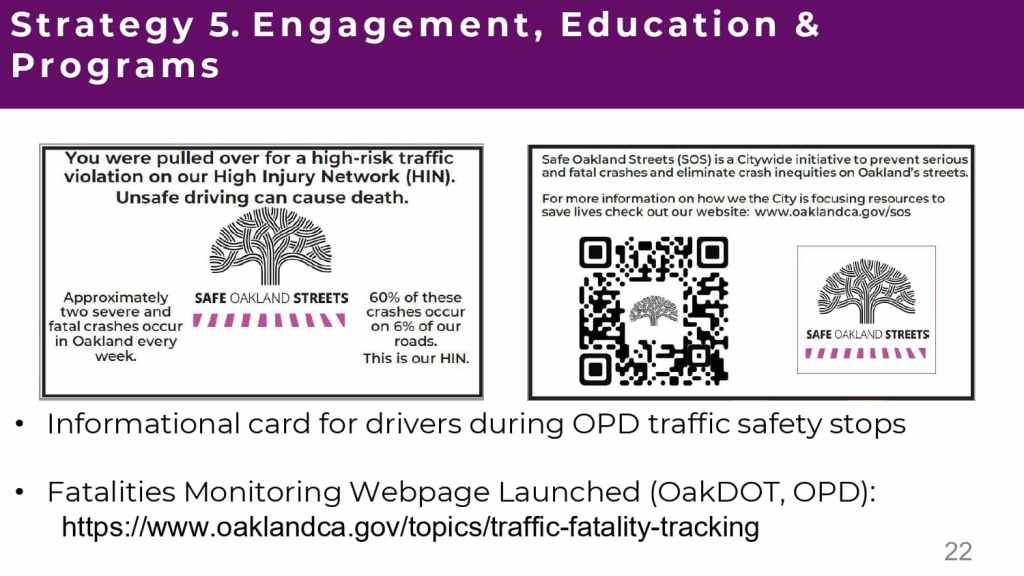



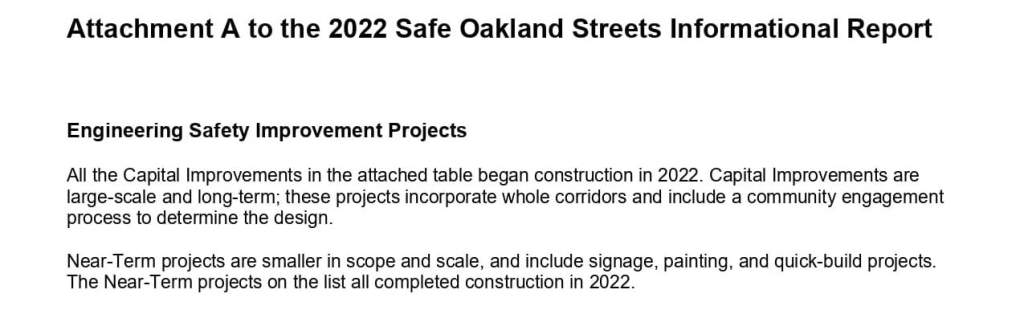
Attachment A to the 2022 Safe Oakland Streets Informational Report
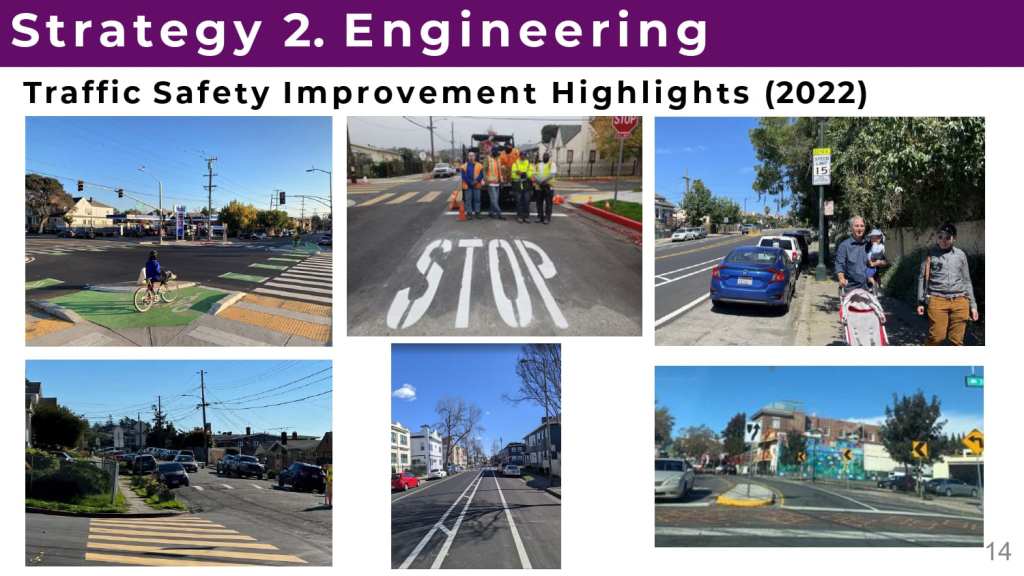
Engineering Safety Improvement Projects
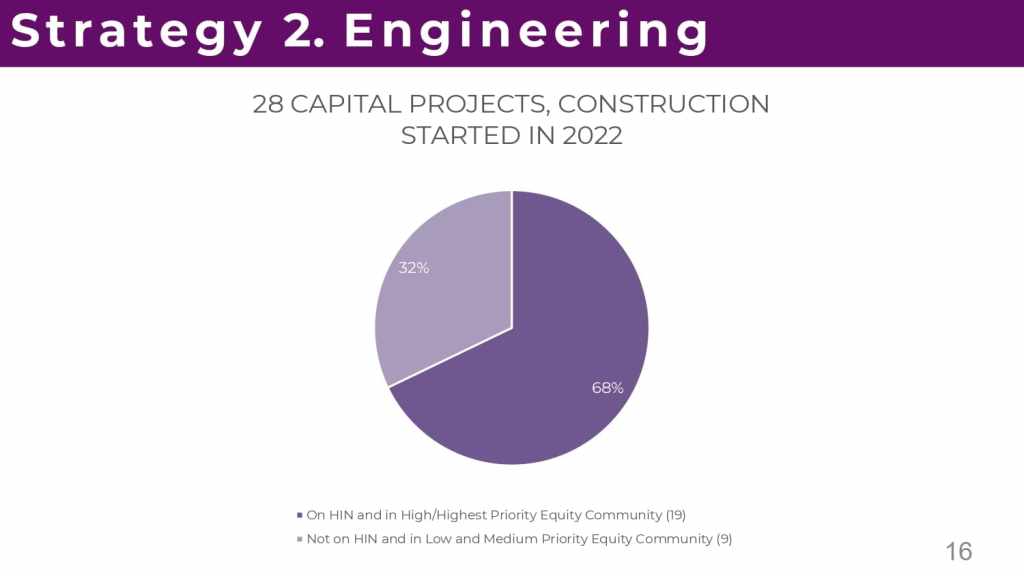
All the Capital Improvements in the attached table (below) began construction in 2022. Capital Improvements are large-scale and long-term; these projects incorporate whole corridors and include a community engagement process to determine the design.
Near-Term projects are smaller in scope and scale, and include signage, painting, and quick-build projects. The Near-Term projects on the list all completed construction in 2022.



 Oakland BPAC Blog