At the July 6, 2023 BPAC Infrastructure Committee meeting, Rochelle Wheeler, Senior Transportation Coordinator at the City of Alameda, will lead a discussion about a bicyclist and pedestrian bridge proposal across the estuary between West Alameda and Jack London Square.
An excerpt of the presentation is below, followed by the full presentation [3.8MB PDF], presentation notes, and discussion notes.
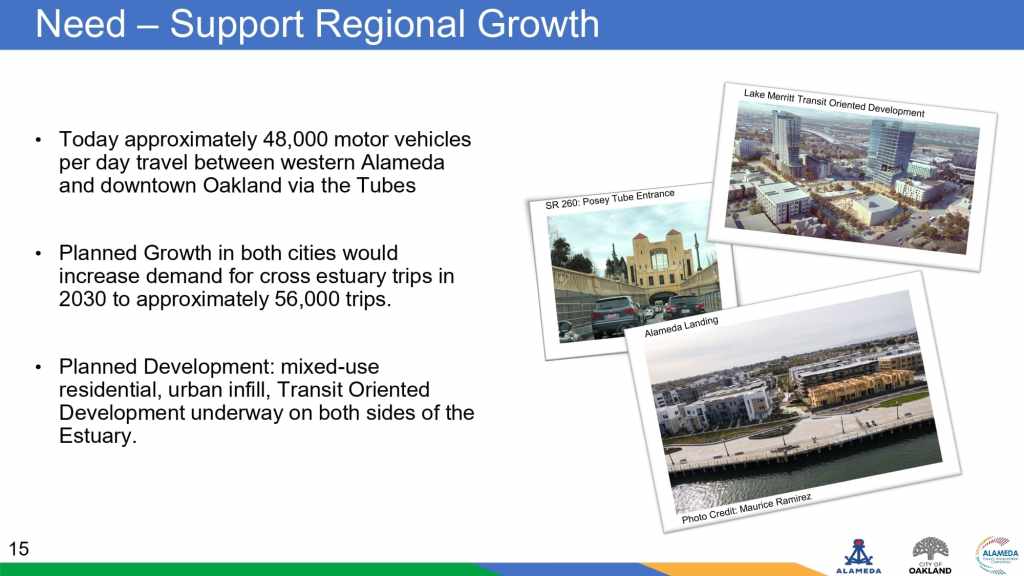
Project Need – Support Regional Growth
- Today, approximately 48,000 motor vehicles per day travel between western Alameda and downtown Oakland via the Tubes.
- Planned Growth in both cities would increase demand for cross estuary trips in 2030 to approximately 56,000 trips.
- Planned Development: mixed-use residential, urban infill, transit-oriented development underway on both sides of the Estuary.
Need – Supporting Healthy Communities
- Reduce vehicle trips
- Health: Mode shift from motor vehicles could off-set the expected increase in air pollutant emissions, thereby protecting community health and promote increased physical activity.
- Greenhouse gas (GHG) emissions: Alameda and Oakland support mode shift away from single- occupancy fossil fuel vehicles to reduce transportation pollution/contributions to climate change.
Presentation




Presentation notes
- Partnership between cities of Oakland & Alameda, with Alameda taking the lead, though a more regional agency may take over as the project proceeds to future phases
- Initial cost estimate of bridge is $200 Million, hoping to bring that down
- Tricky connection over a Coast Guard channel
- Project will need grassroots support from community in order to move forward
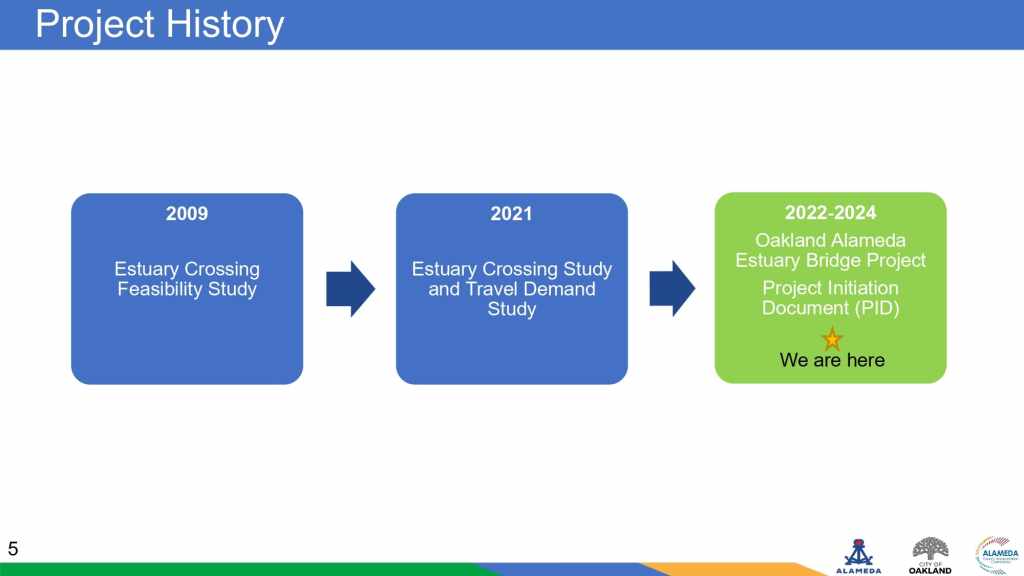
- 2009 study looked at many different options including things like gondolas and water shuttle, but ultimately a bridge was determined to be the best approach for completing this connection.
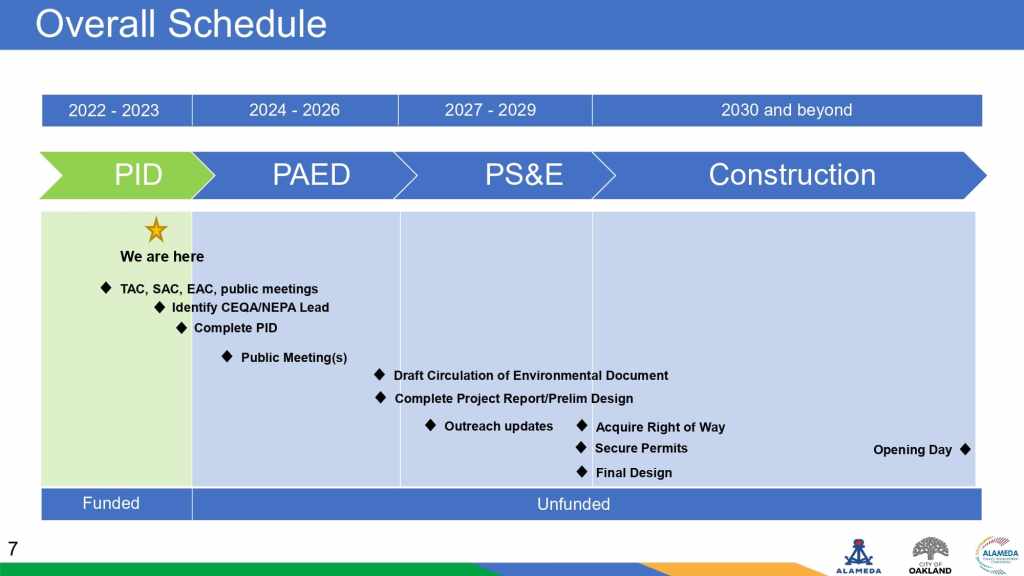
- Project is currently in early planning phase “Project Initiation Document” (PID) from 2022-2024 to determine project feasibility and cost, design concepts, and more.
- Separate Oakland-Alameda Access Project will open a second path for biking & walking through the Webster Tube, but this will still be a narrow and unpleasant facility that most people will not use.
- City created a map showing how far a person could walk, bike, or e-bike in the vicinity if the bridge was available.
- Coast Guard so far requires a 600-foot span between the bridge towers, and the bridge must allow 175 feet of vertical clearance.
- Looking at a lift bridge that starts at 70 feet above the water when not elevated, and with a less than 5% grade (technically ADA accessible, but not ideal)
- City investigating ways to lower the height and reduce the clearance
- Lift bridge could be scheduled to open at specific times to allow for recreational boater use.
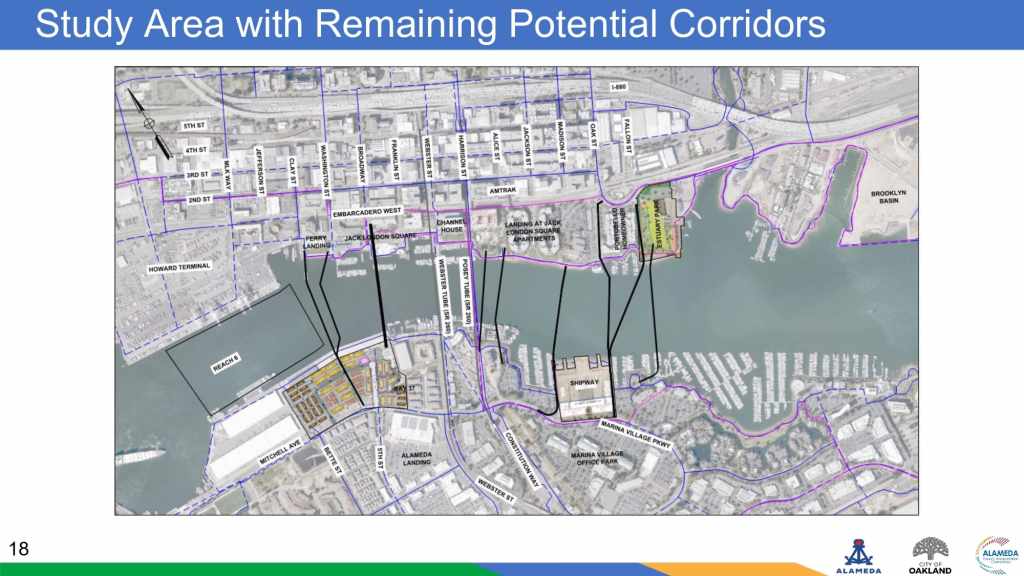
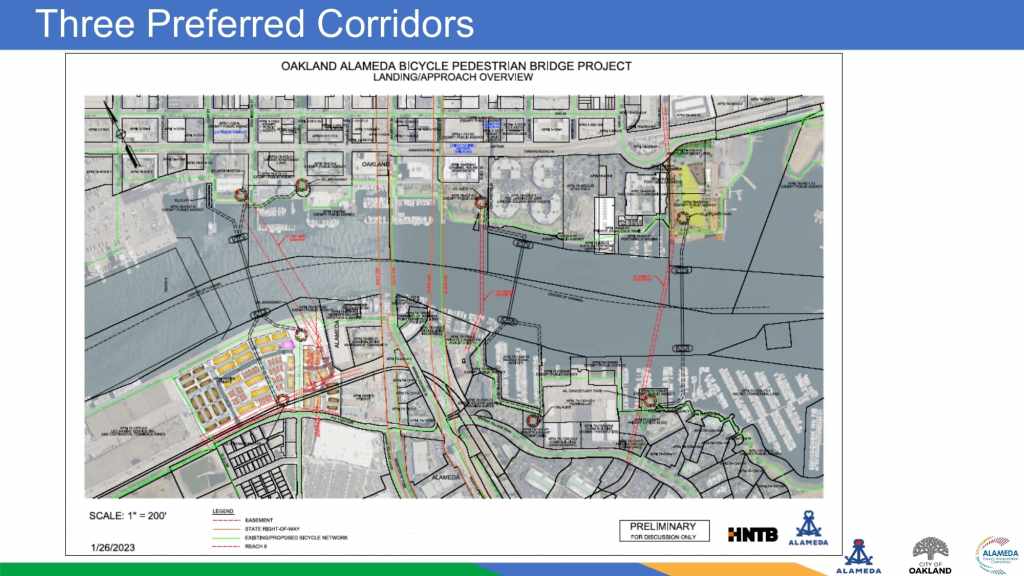
- Currently looking at 13 different alternatives using a matrix to narrow it down to 6 crossing options for further study
- Next set of advisory committee meetings will be in August
Discussion notes
- What other countries’ bridges are being studied? Try including Australia, and make sure the bridge is big enough and not narrow
- International firms are being consulted including from England, Netherlands
- Will the environmental phase result in the final preferred alignment?
- Yes, the six current alternatives will be reduced to one as part of that phase
- What crossings will work best for different factors?
- The western crossing is good for activity due to Jack London Square, the ferry, new housing in Alameda plus the Alameda Landing shopping center including the grocery store. This location would also avoid sailing regatta areas, but it’s also more built up so challenges for the landing.
- Would the western crossing have a 5% grade?
- Any of the alignments could have this grade but staff are looking to reduce this.
- Is elevator access being considered in addition to ramp?
- Yes, it’s being considered.
- Elevator access would be helpful for people with groceries, cargo bikes, etc – Large wide door elevator would be needed.
- Alameda County funding has been awarded for a 2-year water shuttle starting in Spring 2024 – WETA, the existing Bay Area ferry service operator, is likely to operate it 5 days per week at least 8 hours a day. About 75% of total cost is coming from private developers.
- Needs to be ADA accessible and have lots of space for bikes
- Using public dock at the foot of Broadway in Oakland
- This ferry service will be free of charge for users
- What are ways that people can get involved and the committee can help?
- Share the project website, take the survey, and sign up for updates.
- If you know of any community groups to share project info, please send info to Rochelle.
 Oakland BPAC Blog