
At the January 11, 2024 BPAC Infrastructure Committee meeting, the City of Oakland’s Bicycle and Pedestrian Program staff provided an overview and analysis on the implementation of the 2019 Citywide Bicycle Plan to date, including an evaluation of Bike Plan proposals that were implemented and not implemented as part of projects constructed since 2019.
An excerpt of the presentation is below, followed by the full presentation and notes from the presentation and discussion.
Common reasons a bikeway was not built
- Paving segment was too short.
- Future project planned.
- Bike plan has difficult/impractical recommendations.
- A simpler project was implemented in light of resource constraints.
- NBRs can be designated as bikeways after paving rather easily, compared to bike lanes.
Presentation

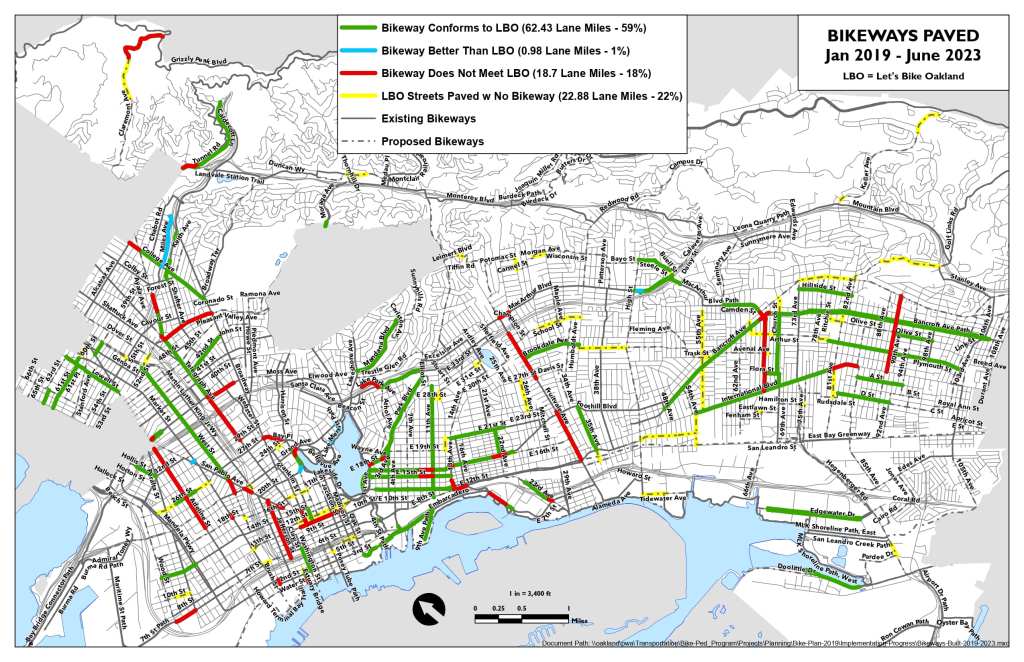


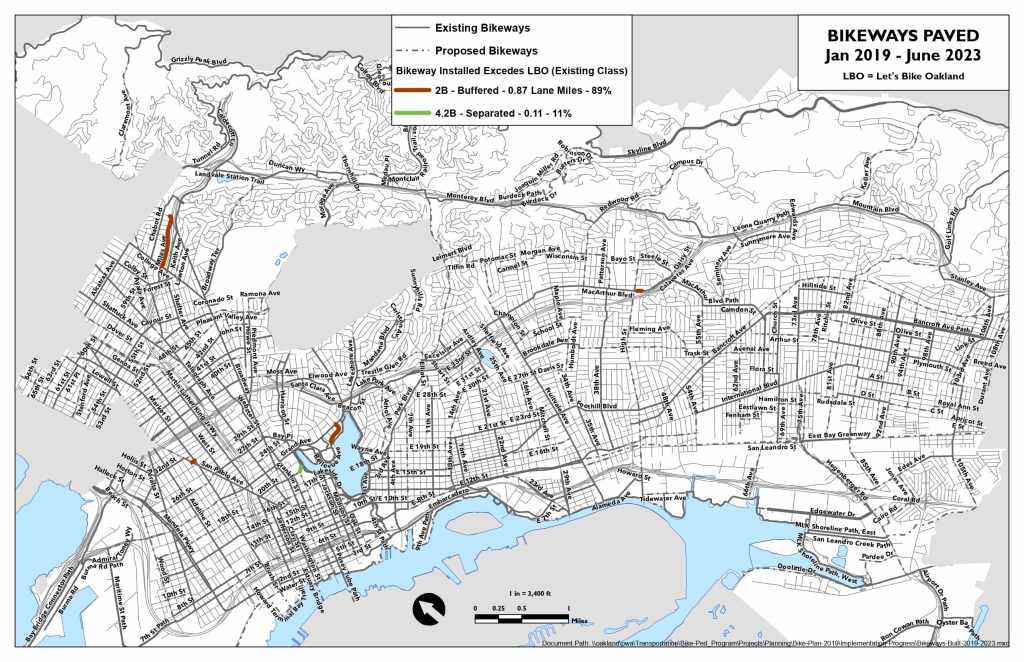
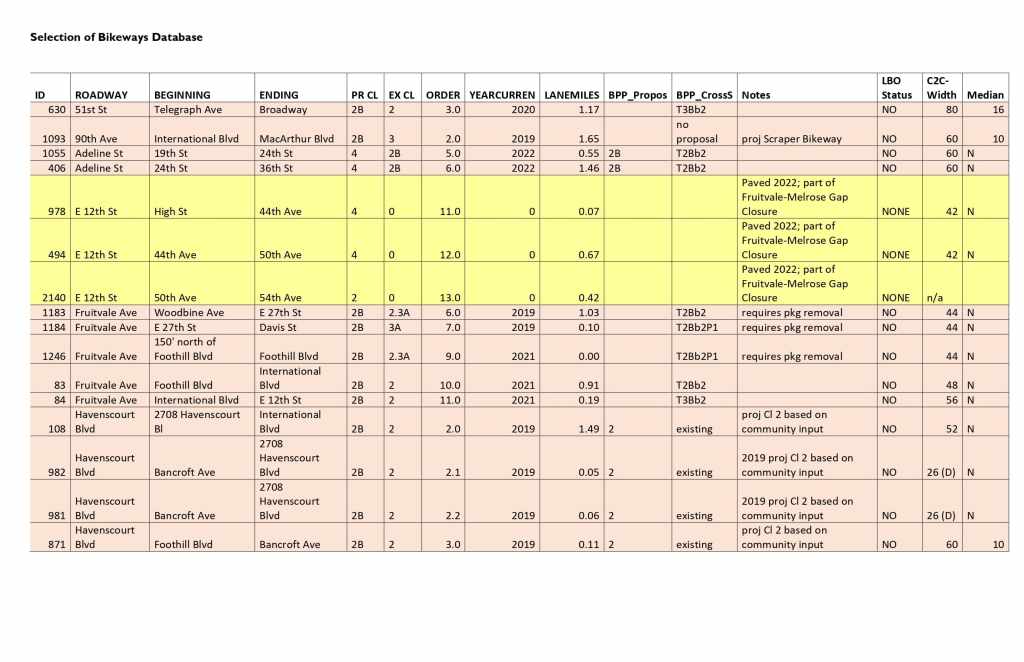


Presentation and discussion notes
- Previously presented to the full bike/pedestrian advisory commission, talking about progress since 2019.
- Commenter asked to also see info about what didn’t happen as planned, in addition to what did—this presentation focuses on that.
- Staff looked at all the streets 2019-2023 where there was some sort of capital project, including routine paving, which overlapped with bike plan recommendations.
- Vast majority of the bikeway types that weren’t delivered as planned were mostly buffered bike lanes, some protected bikeways.
- Vast majority of the bikeway types that weren’t installed at all were neighborhood bike routes, some protected bikeways.
- In some cases there was a larger grant funded project already in the works.
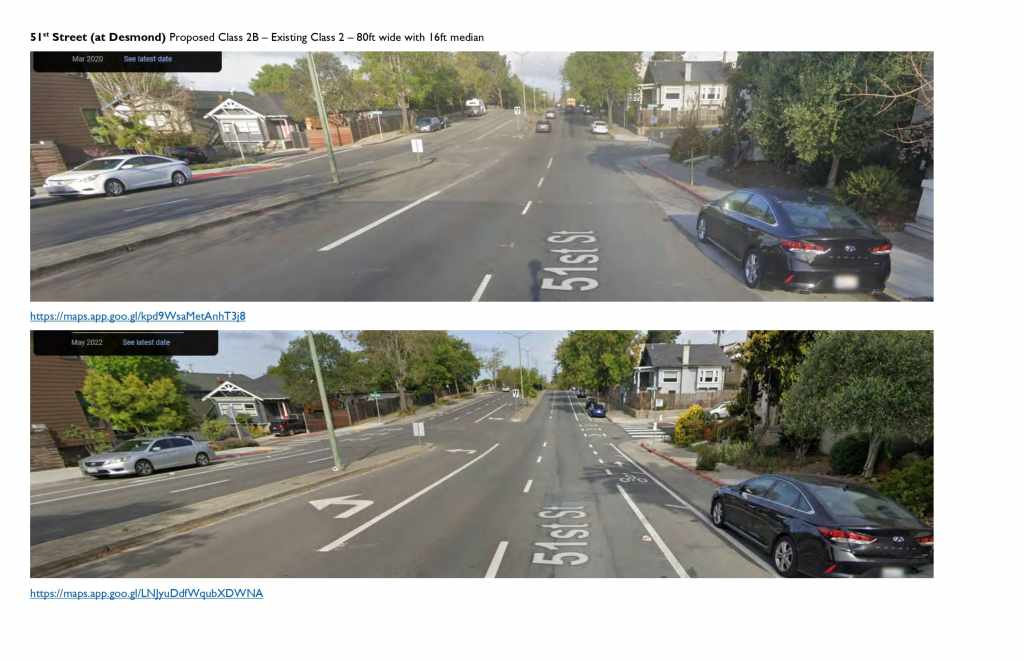
- Example: 51st Street between Broadway and Telegraph
- Previously no bikeway, a basic bike lane was delivered with paving but not a buffered bike lane as recommended in the bike plan—Would have required a road diet, wasn’t enough staff capacity for advance planning ahead of the paving project.
- Another alternative could have been to repave the street with no bike lane, so the outcome was a result of staff trying to do what they could within the time constraints.
- Comment: What is a road diet?
- Reducing the number of car travel lanes on a street and repurposing that space for something else.
- Comment: Getting a bikeway installed, even imperfect, will encourage people to ask for something even better.
- Historical context—51st Street was one of the final streets in Oakland to be widened.
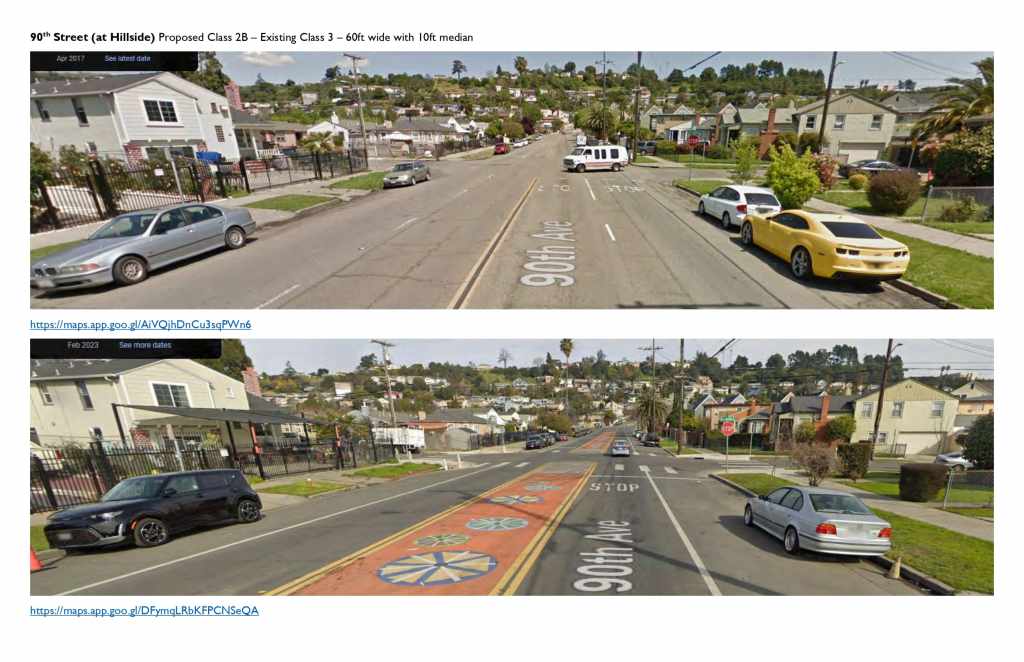
- Example: 90th Ave Scraper Bikeway from International to Bancroft
- Not technically considered a bikeway, but is the outcome of a community process to provide preferred bike access.
- Comment: Street is set to be repaved again, opportunity to further improve signalized crossings like at Bancroft.
- Comment: Is Oakland able to make changes going forward without as much study? Yes, there have been changes via state law which enables bikeway upgrades without as much study required.
- Example: Adeline Street, 580 to 20th Street
- Went from 4 car lanes to 2 car lanes with a buffered bike lane on each side, although the bike plan called for a protected bikeway. As part of a utility coordination project, a quick-build project was implemented instead of the recommendation, was designed in just 2 weeks with costs shared by utility.
- Comment: Is it just that a protected bikeway would require a much bigger project, or does staff feel that the bike plan recommendation is infeasible?
- Response: It doesn’t have to be either/or, there could be some protected sections and some buffered. Parking compliance is also an issue.
- Example: Fruitvale north of International
- Buffered bike lanes were proposed, standard painted bike lanes were built.
- Buffered bike lanes would have required car parking removal on at least one side of the street—so the bike plan recommendation may have been infeasible since drivers would then park blocking the bike—protected bike lanes would then be preferable but wasn’t doable within the context of this project.
- Comment: Similar to High Street, which was paved without any bikeway—staff was concerned that a paint-only bike lane would be parked in, but protected was not doable within the project budget.
- Example: Havenscourt between International and Bancroft
- Buffered bike lanes were proposed, but standard painted bike lanes were built.
- As part of community process, a wide standard bike lane was installed instead, along with added traffic calming including traffic circles and rain garden sidewalk extensions.
- Traffic calming isn’t usually indicated in the bikeway typology, but can make a big difference in the safety and comfort of a facility. West Street is another example where the city added both a bikeway upgrade along with significant traffic calming.
- Comment: Is there a target number of bikeways to be delivered per year?
- No, bikeway delivery is usually dependent on the paving plan and grant funding availability for capital projects.
 Oakland BPAC Blog