
At the July 28, 2025 BPAC Policy and Legislative Committee meeting, Liza Lutzker will present on “Examining the Safety-Safety Dilemma: Preliminary Findings from a Study of Conflicts between Safe Streets Improvements and Emergency Response“.
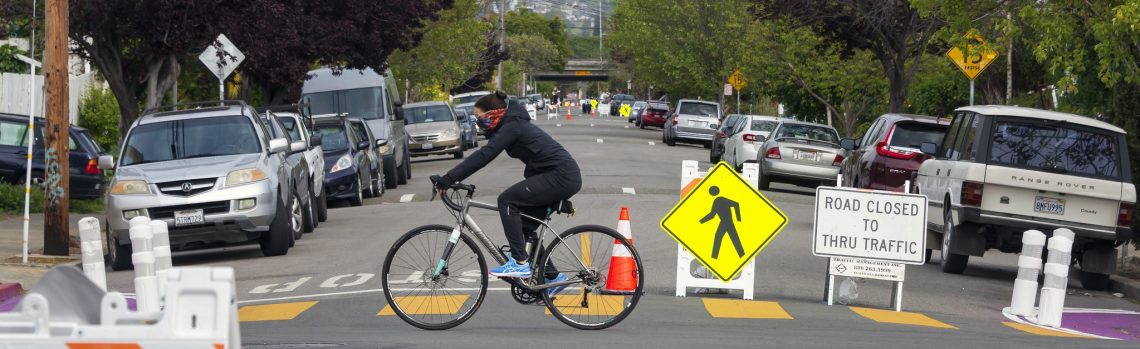
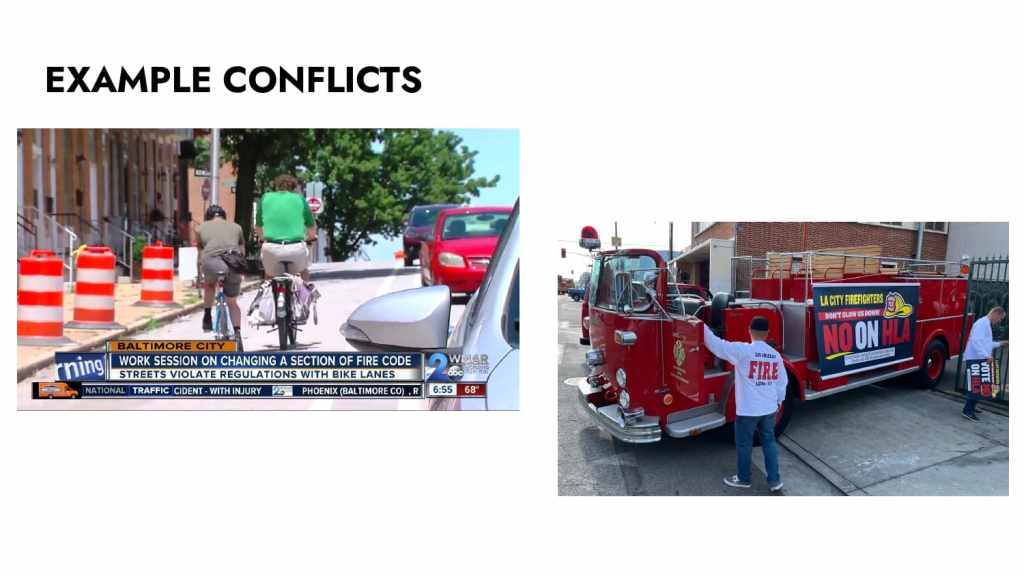
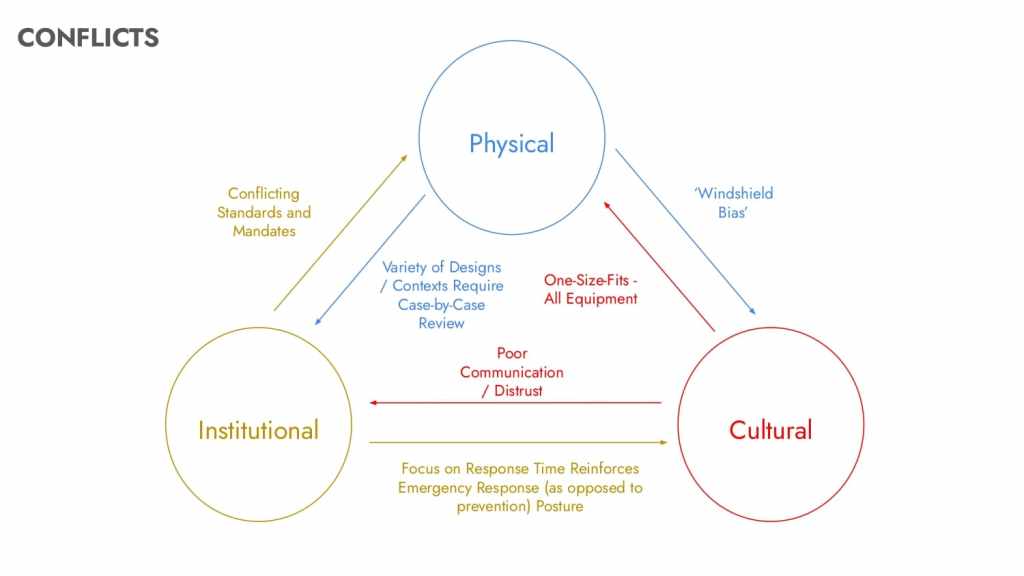
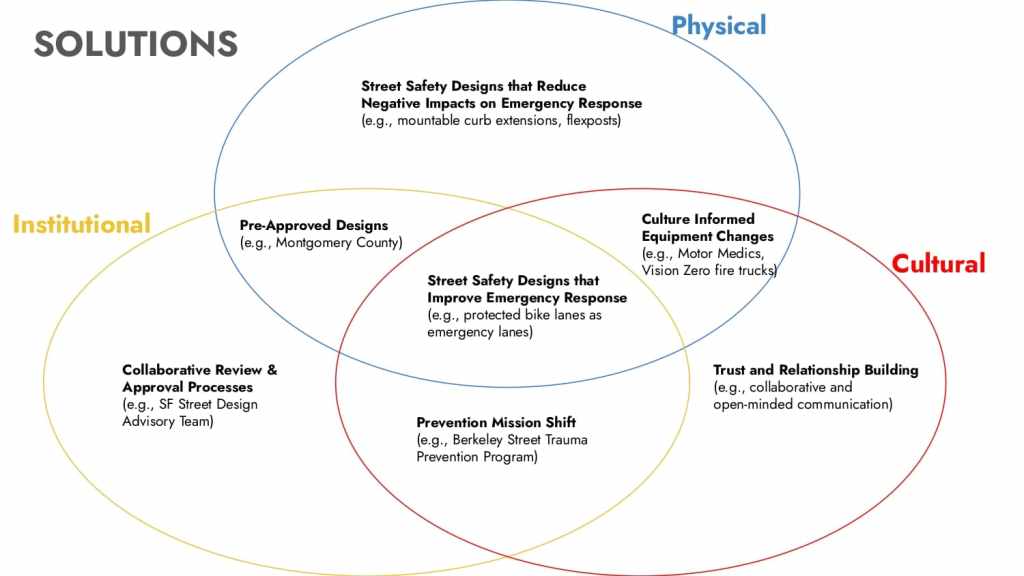
Cities across the United States (U.S.) are encountering mounting tensions between efforts to improve street infrastructure for pedestrian and bicyclist safety (e.g., protected bike lanes, speed tables) and concerns from fire departments that such changes can impede emergency response and evacuation. However, emergency response and street safety need not be incompatible goals. Cities across the U.S. are developing innovative solutions, addressing the physical, institutional, and cultural roots of these conflicts.
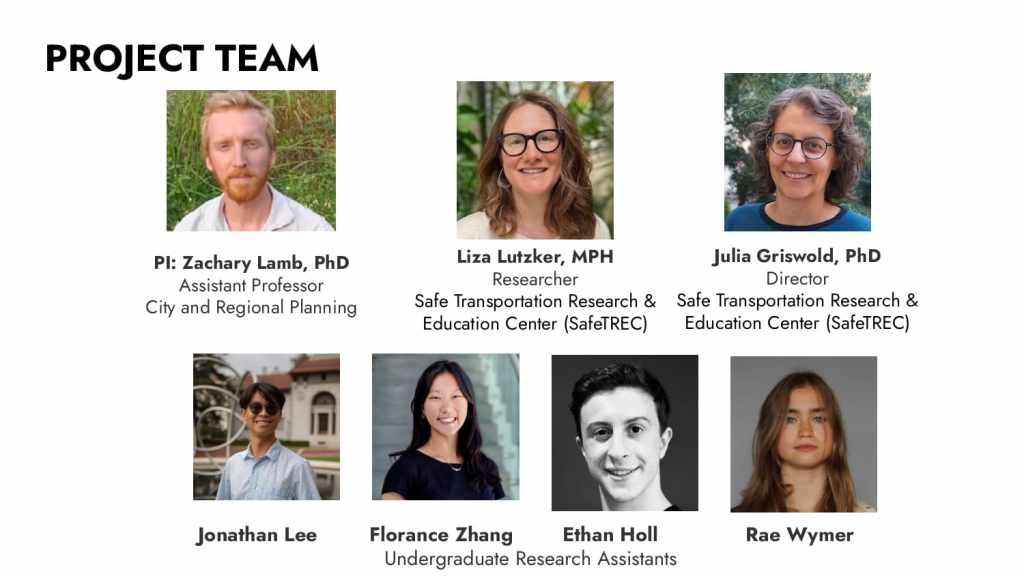
Under a grant from the US Department of Transportation and the Center for Pedestrian and Bicyclist Safety, our UC Berkeley team is completing an exploratory research project to better understand the roots of conflicts and innovative means of overcoming conflicts. Under a grant from the US Department of Transportation and the Center for Pedestrian and Bicyclist Safety, our UC Berkeley team is completing an exploratory research project to better understand the roots of conflicts and innovative means of overcoming conflicts between street safety efforts and fire and emergency response priorities.
An excerpt is below, followed by the full presentation.
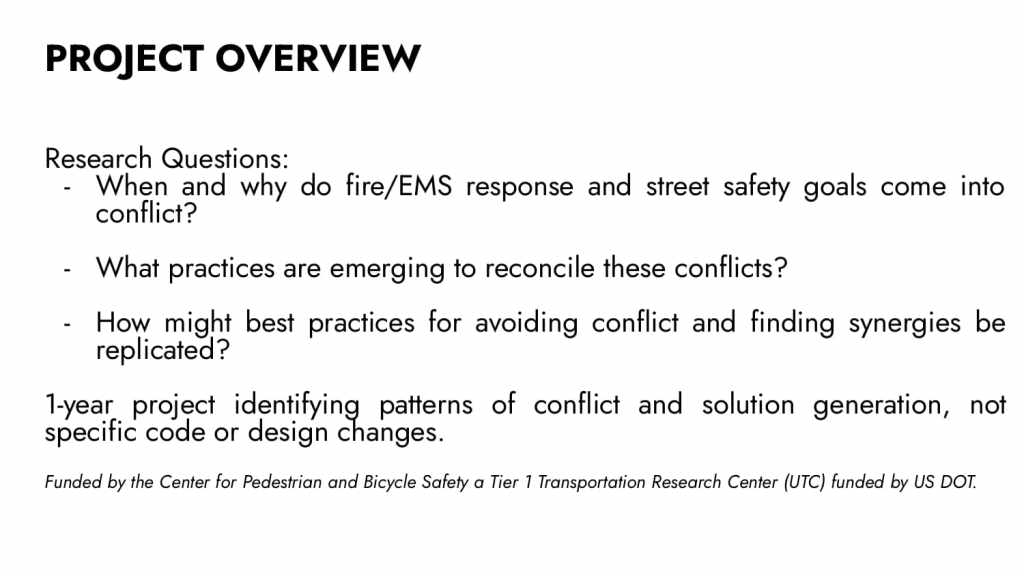
Project overview
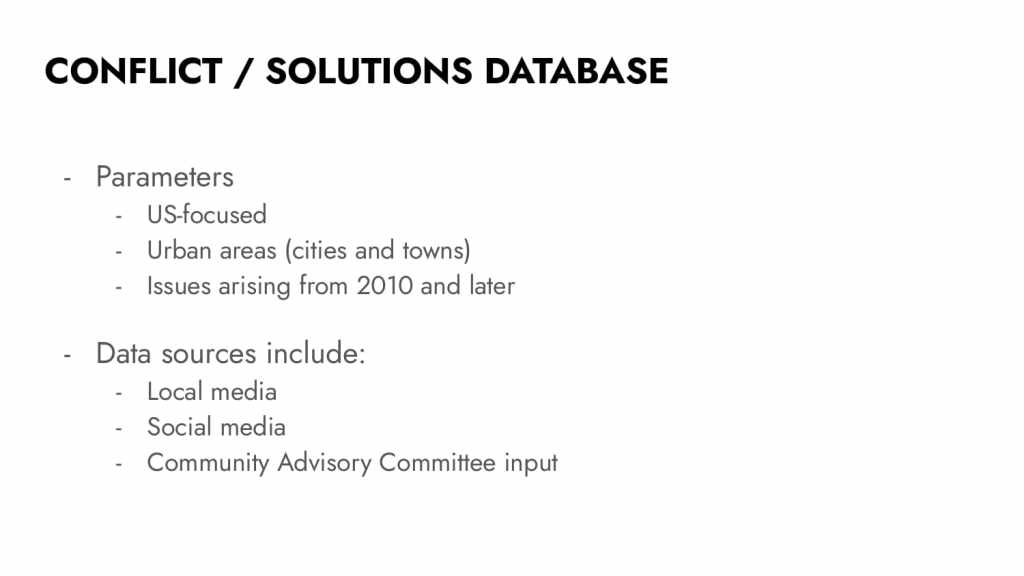
1-year project identifying patterns of conflict and solution generation, not specific code or design changes.
Research Questions:
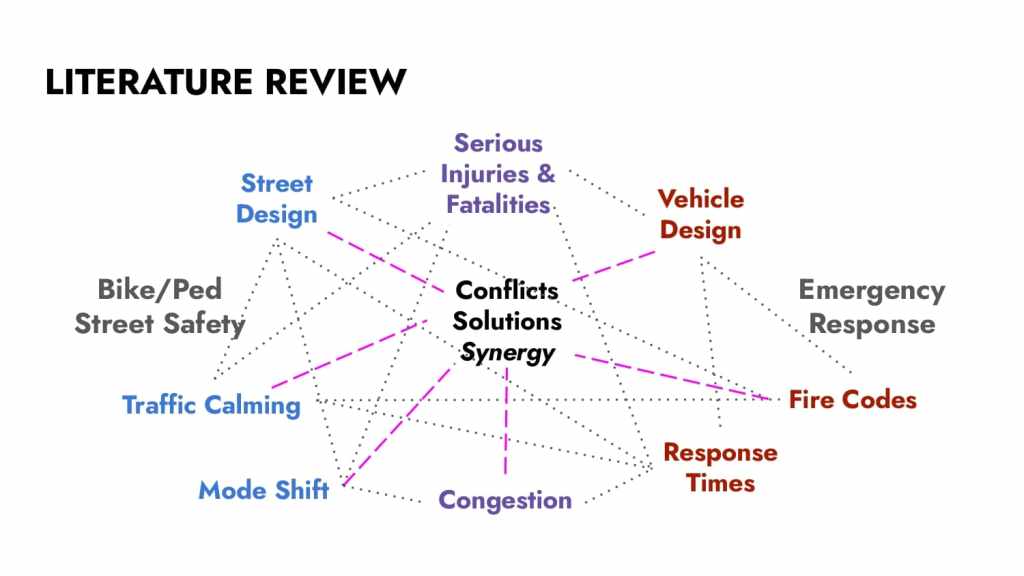
- When and why do fire/EMS response and street safety goals come into conflict?
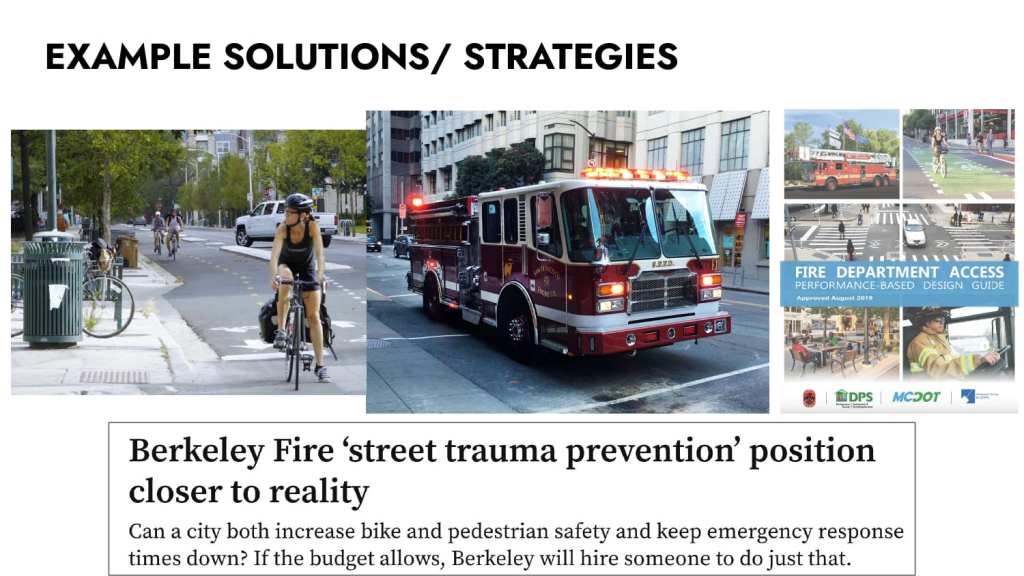
- What practices are emerging to reconcile these conflicts?
- How might best practices for avoiding conflict and finding synergies be replicated?
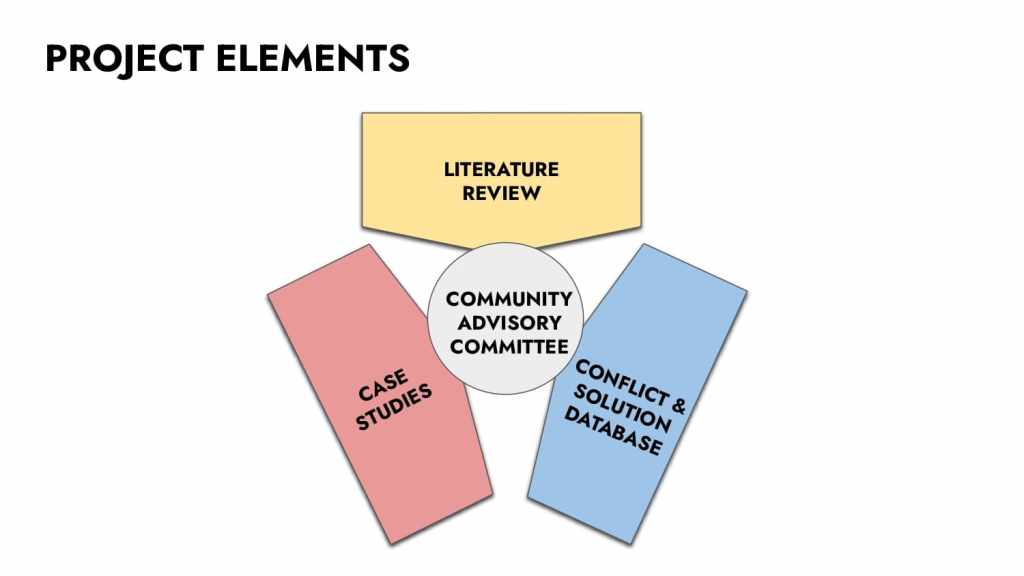
Case studies
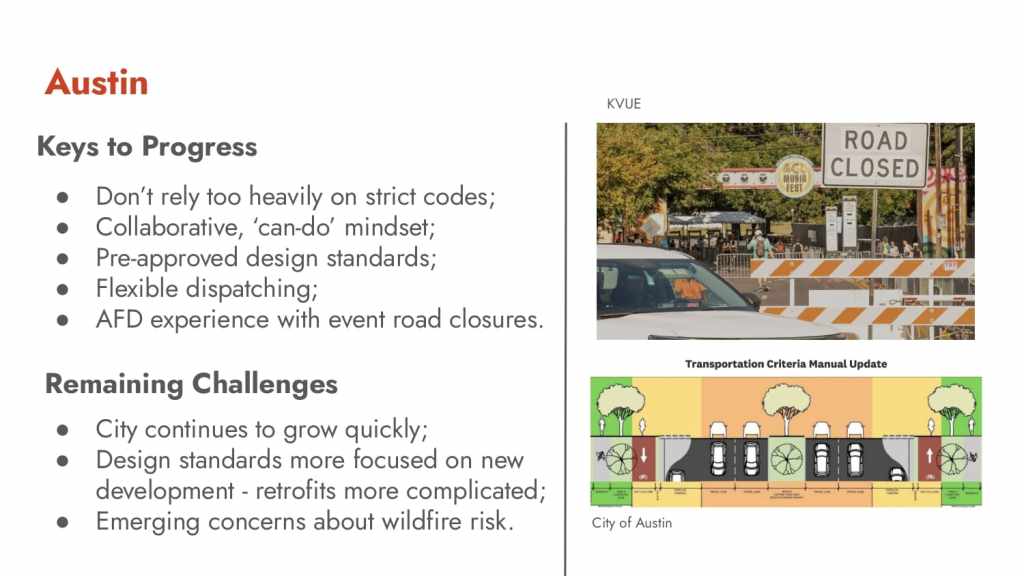
- Austin
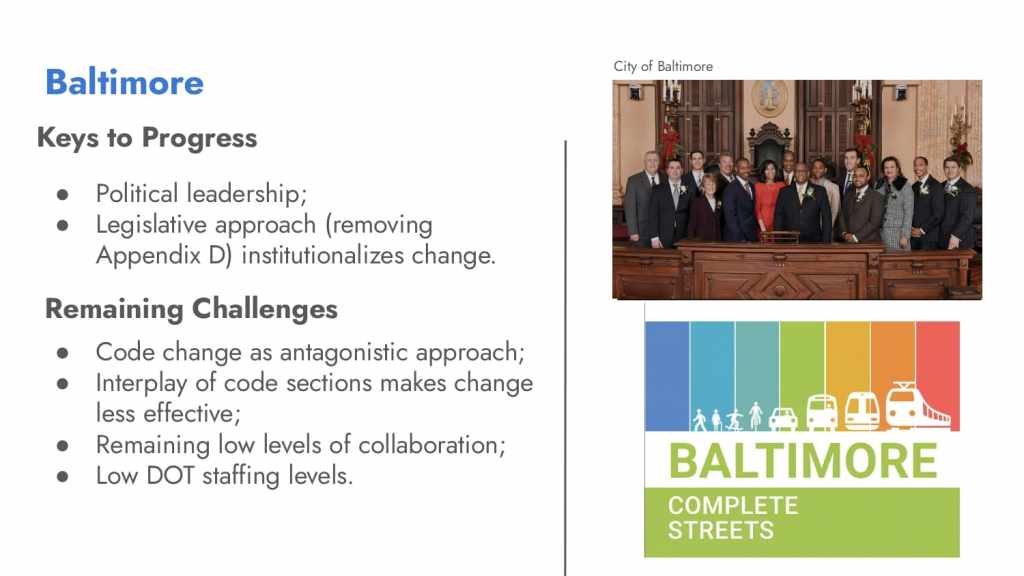
- Baltimore
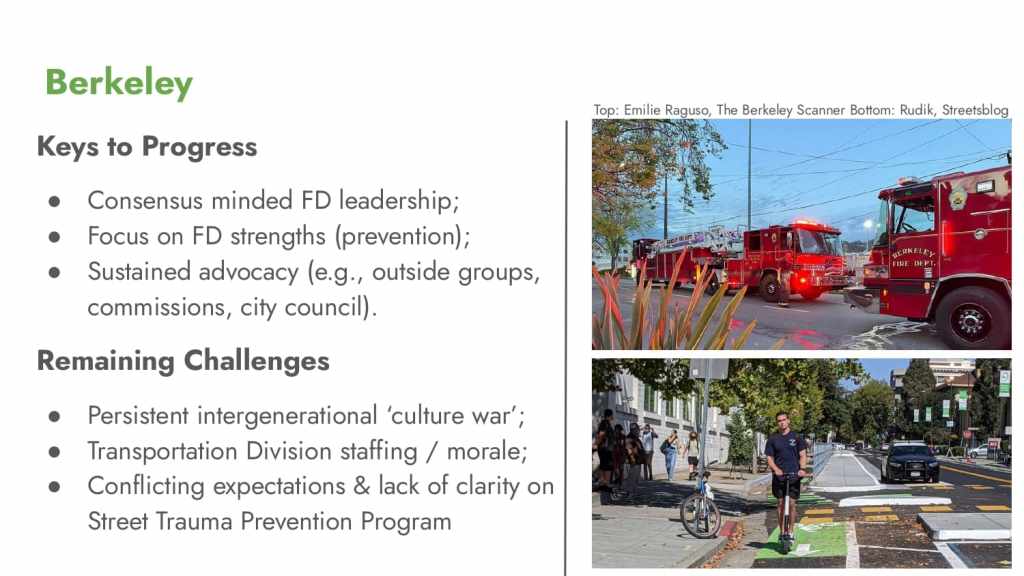
- Berkeley
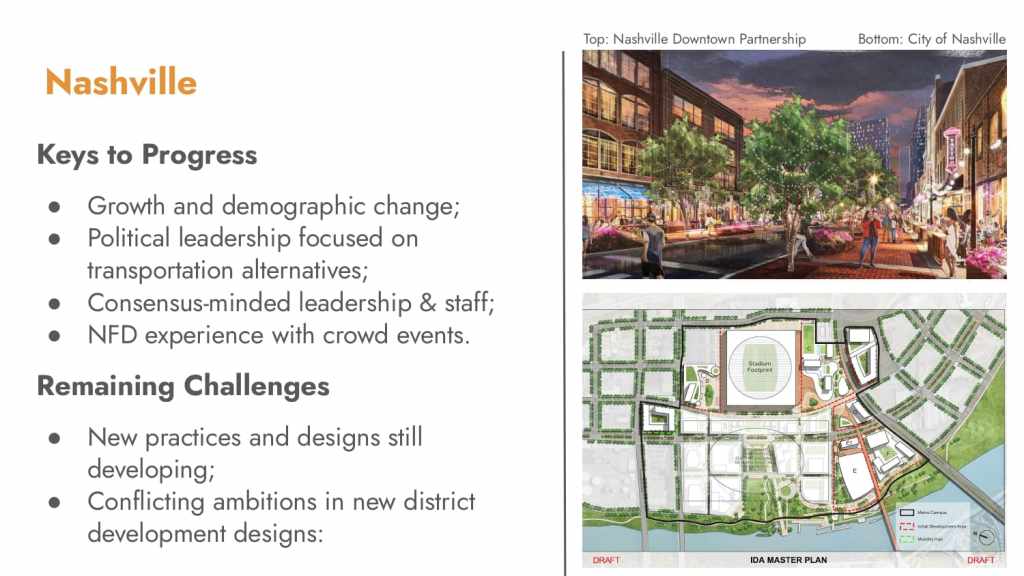
- Nashville
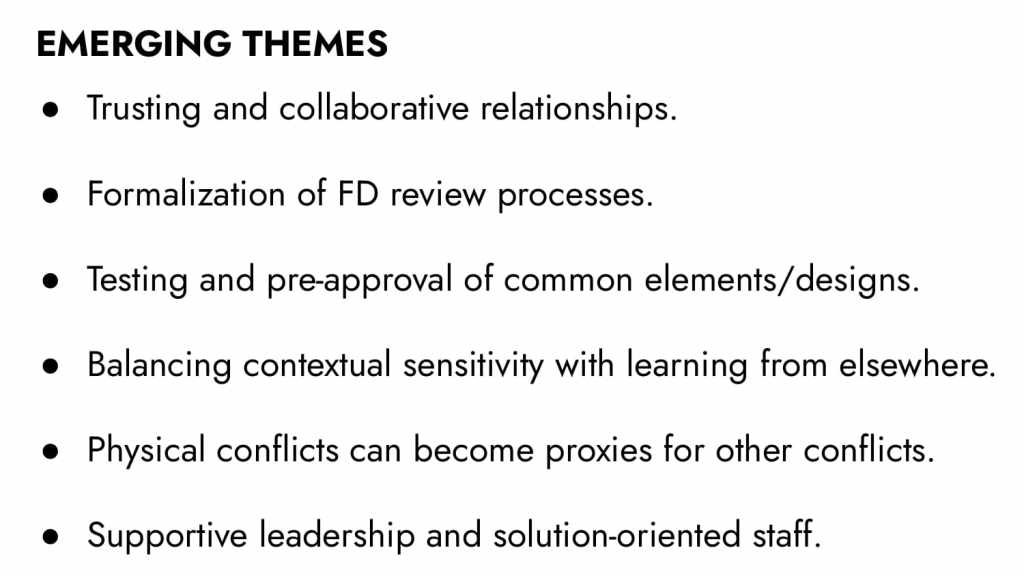
Emerging themes
- Trusting and collaborative relationships.
- Formalization of FD review processes.
- Testing and pre-approval of common elements/designs.
- Balancing contextual sensitivity with learning from elsewhere.
- Physical conflicts can become proxies for other conflicts.
- Supportive leadership and solution-oriented staff.
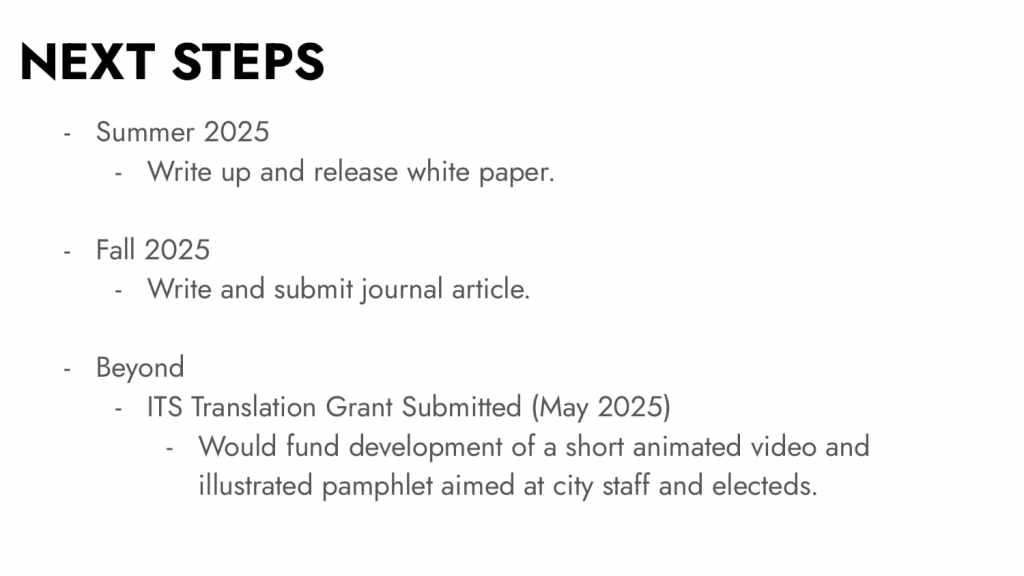
Next steps
- Summer 2025 – Write up and release white paper.
- Fall 2025 – Write and submit journal article.
- Beyond – ITS Translation Grant Submitted (May 2025)
- Would fund development of a short animated video and illustrated pamphlet aimed at city staff and elected officials.
Presentation


 Oakland BPAC Blog