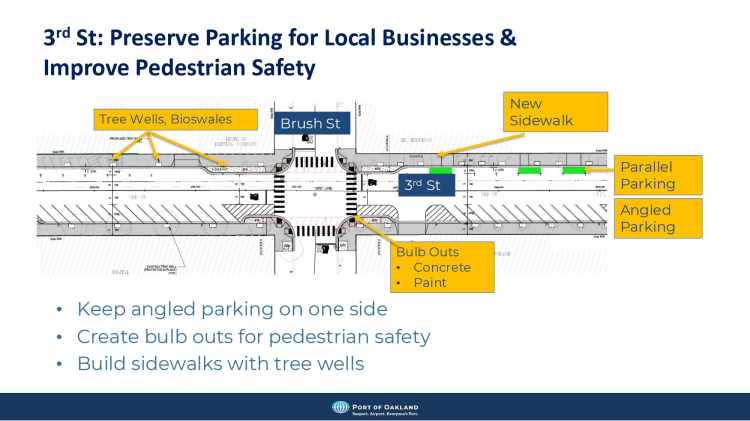
At the November 6, 2025 BPAC Infrastructure Committee meeting, Marjon Saulon, Government Affairs Representative of the Port of Oakland provided an update on an Adeline Corridor project and 3rd Street Truck Corridor proposal through the Jack London Square area.
An excerpt is below, followed by the full presentation.
At the November 6, 2025 BPAC Infrastructure Committee meeting, Oakland DOT Complete Streets Infrastructure Division Planning staff will provide a presentation on upcoming and ongoing design work on paving streets, with corridor highlights including 38th Ave, Foothill Blvd, and 14th Ave.
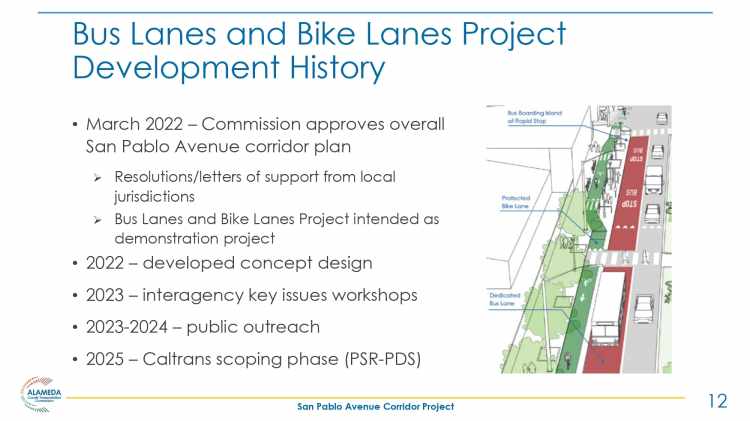
At the November 6, 2025 BPAC Infrastructure Committee meeting, Alameda County Transportation Commission staff will provide a presentation and update on the San Pablo Ave Parallel Bike Improvements Project in North Oakland, and the Bus Lanes and Bike Lanes Project from Downtown Oakland to the Berkeley border.
An excerpt is below, followed by the full presentation.
The BPAC Infrastructure Committee meeting will be held on Thursday, November 6, 2025, 3:30-5:30pm in-person at the Broadway Conference Room (4th floor) at 250 Frank Ogawa Plaza building.
Agenda topics include:
2026 Paving and Bike Plan Coordination
Port of Oakland Arterial Roadway Improvements Project, 3rd Street and Adeline Street Corridors
San Pablo Avenue Corridor Projects Update from ACTC
At the October 16, 2025 BPAC meeting, Jane Mei and Manuel Corona, Transportation Planners in the Major Project Division at OakDOT, will present on Caltrans Sustainable Planning Grant applications in development for Fiscal Year 2026-2027. The presentation will include two planning projects that OakDOT will be applying for: 1) the Hegenberger Complete Streets Plan and 2) the San Antonio Neighborhood Connections Plan; staff will be requesting letters of support from BPAC.
An excerpt is below, followed by the full presentation.
Thursday, October 16, 2025; 6-8pm, in-person meeting at City Hall, Hearing Room 4, and viewable online.
Agenda topics include:
Caltrans Sustainable Transportation Planning Grant Application Projects: San Antonio Neighborhood Connections Plan and Hegenberger Road Complete Streets Plan


 Oakland BPAC Blog